Author: ellie

  • From Village to Continent

    From Village to Continent

    How the vision of the Bethany Land Institute grew from humble village beginnings to a continental model,

    Author: Fr Emmanuel Katongole is a Catholic priest of Kampala Archdiocese, Uganda, and co-founder to the Bethany Land Institute

    On Tuesday 26th of May, the Journey to 2030 network met online for the latest session in our Jubilee Garden Project series. We were joined by Fr Emmanuel Katongole, co-founder of the Bethany Land Institute, who shared the story of this inspiring organisation and reflected on how its lessons might be applied to our own Jubilee Garden spaces. This blog is a summary of his talk.


    Fr Emmanuel grew up in Malube, a small village in the Mpigi District of central Uganda. He remembers a beautiful rural childhood of the 1960s as a part of a close-knit community surrounded by native forests. He watched over the years how his home became less and less connected with nature; trees were felled to make way for mono-crops, disenchanted youths left the village to live in the cities, often ending up in slums. Fr Emmanuel recognised that the root of the issue was not just environmental, but educational and economic as well. He teamed up with friends Cornelius and Tony to create the “3 Es” initiative – looking at how Environment, Education, and Economics are interconnected challenges that require integrated solutions. They were able to buy some land to plant a forest, and the project grew from there.
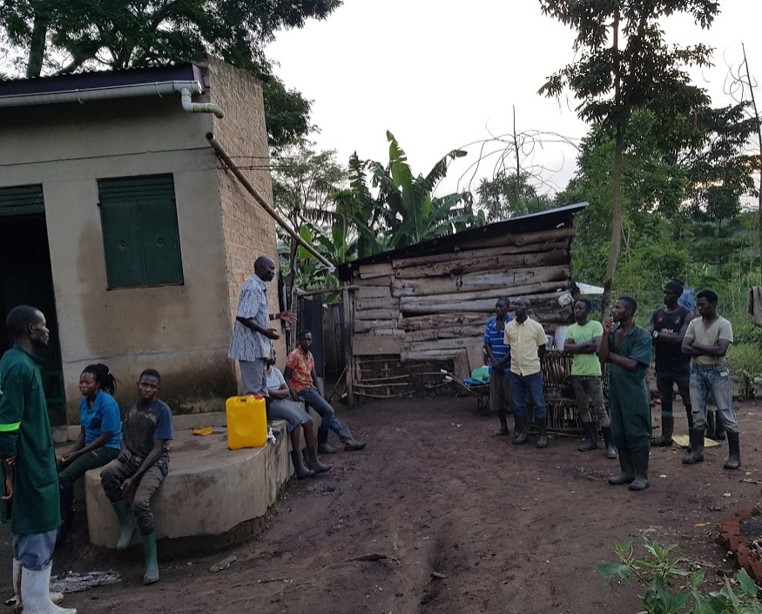
    a group of young people listening to a lecture in a village in Uganda
    A group of young people attending the initiative in its early days.

    On this land, they started gathering young people to teach them about agriculture. Pope Francis’ Laudato Si’ became the framework for their work; emphasising the connection between the cry of the earth and the cry of the poor, the importance of integral ecology, and the spiritual transformation required for ecological conversion.  This became the impetus for the team to found a centre for integral ecology.
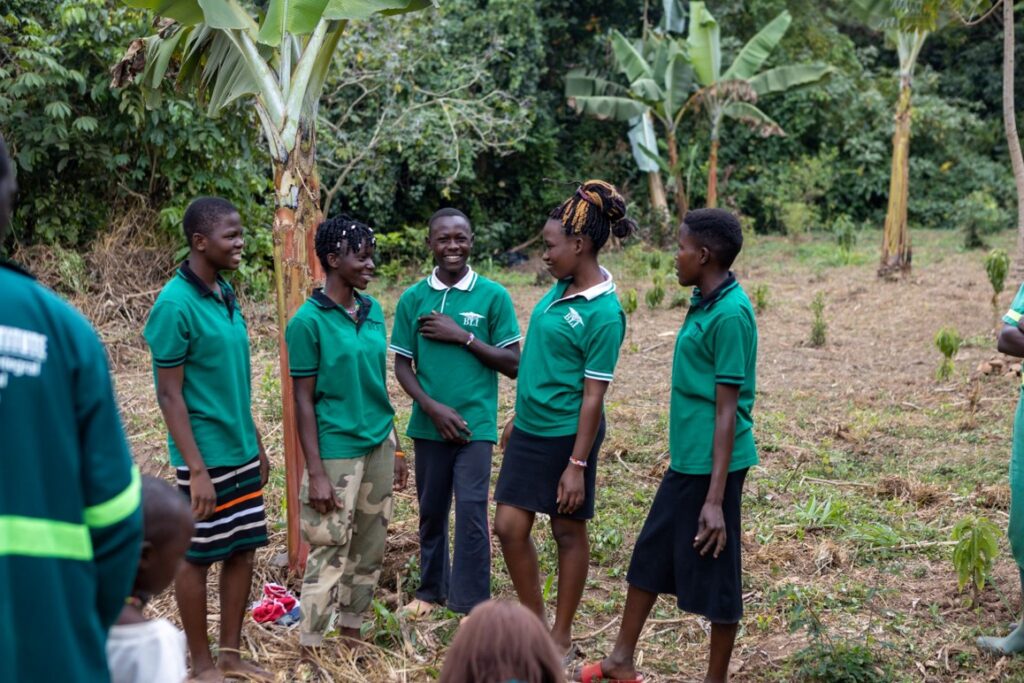
    A group of young people standing in a farm in Uganda, smiling.
    A group of young people attending the initiative in its early days.

    The Kasana-Luweero Diocese recognised their work and gave them some new land (over 400 acres) near a Catholic parish to make their “Laudato Si’ Diocese”. The land was degraded by logging and in need of conservation. In 2019 they signed their 49-year lease and have been working hard since then. And so, the Bethany Land Institute was born.
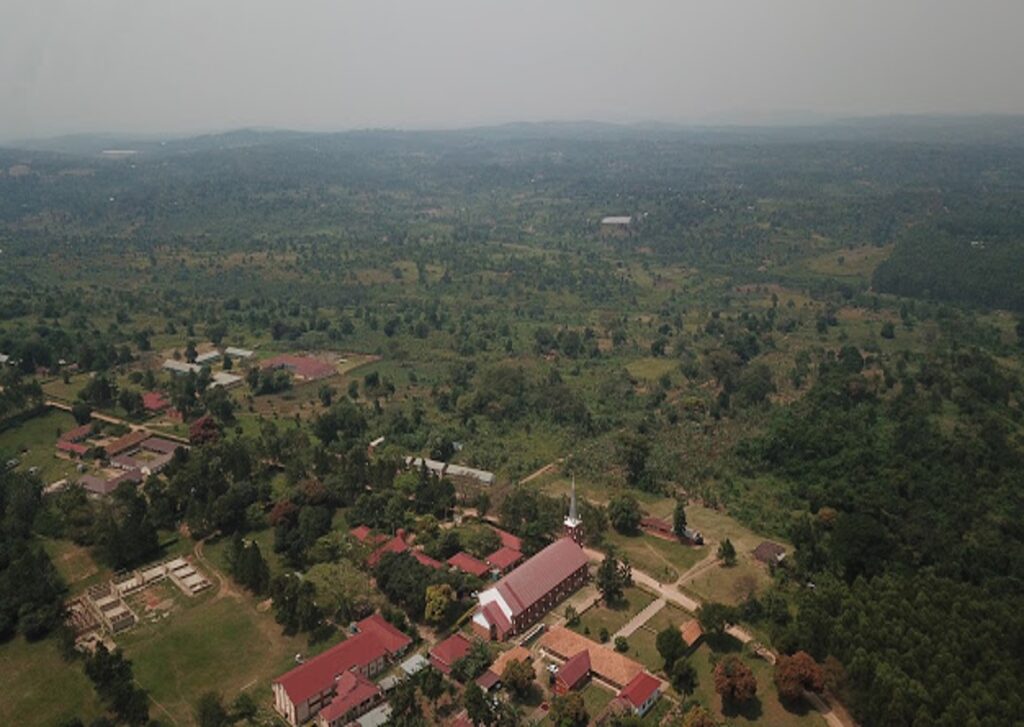
    An overhead picture of the new land acquired for the Bethany Land Institute.

    The site is split into 3 key components, focusing on the family of Bethany – Mary, Martha, and Lazarus. Bethany was a village within walking distance of Jerusalem where the poor lived (the name literally translates from Aramaic “beit ‘anya” as “house of the poor”). It was where Jesus stayed whenever he visited the city. In this sense, it provides a powerful lens for the Church in Africa, as it ministers to some of the world’s most marginalised communities. The three characters of Bethany also lent themselves perfectly to the original goals of the project – Economics, Environment, and Education:

    • Mary’s school: Mary is always sitting down and listening to Jesus; she captures the essence of attentiveness and learning that inspired the educational component of the programme. It explores how we listen to our relationship with God, planet and others – forming participants in these relationships through regenerative agriculture; responding to the earth in a way that is not violent or coercive. The students are called “caretakers” (Genesis 2:15) and spend 2 years at the school. Seminarians also take part in a 4-month stay at the school, to experience the closeness with the planet and provide them with the formation needed for parish life.
    • Martha’s market: Martha is the character who manages the home, and so is the Economics wing of the institute. This is where students are educated on finance, business, accounting, banking and marketing and understanding how the land can provide a sustainable livelihood. This also includes a saving and credit organisation (SACCO) where students can save and borrow money
    • Lazarus’ forest: Lazarus, the brother who was sick, died, and brought back to life, exemplifies the need to conserve native forests. The ecological education component of the institute is about showing how nature, currently suffering, needs to be revived. The forest is a site of nature’s resurrection; serving as the only native forest in the 150-mile radius. It is a 244 acre site with over 230,000 trees and 223 bird species, with a goal to plant 1 million trees by 2050.
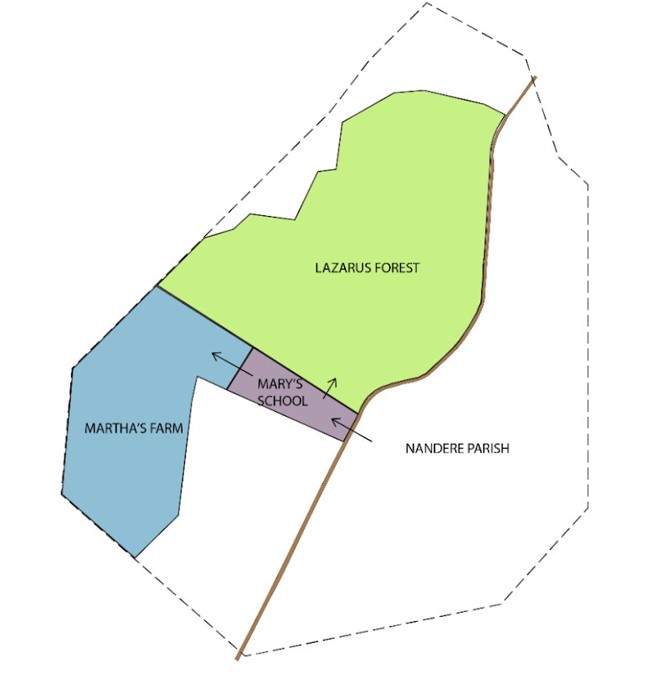
    A map of the site showing the 3 main components.

    The aim of these 3 projects is community transformation; bringing regenerative agriculture to rural communities, working with farms and schools to change practices. They are now measuring their impact across the Nadere “model parish”; using a 5-year study to understand how their work is influencing the communities surrounding the Bethany Land Institute. Last year, they celebrated the 10th anniversary of Laudato Si’ at the institute to share their model for the regeneration of rural life in Africa.
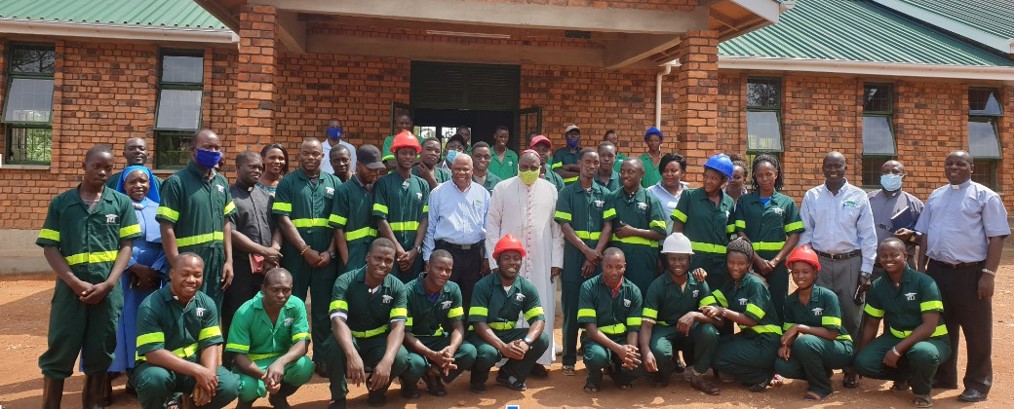
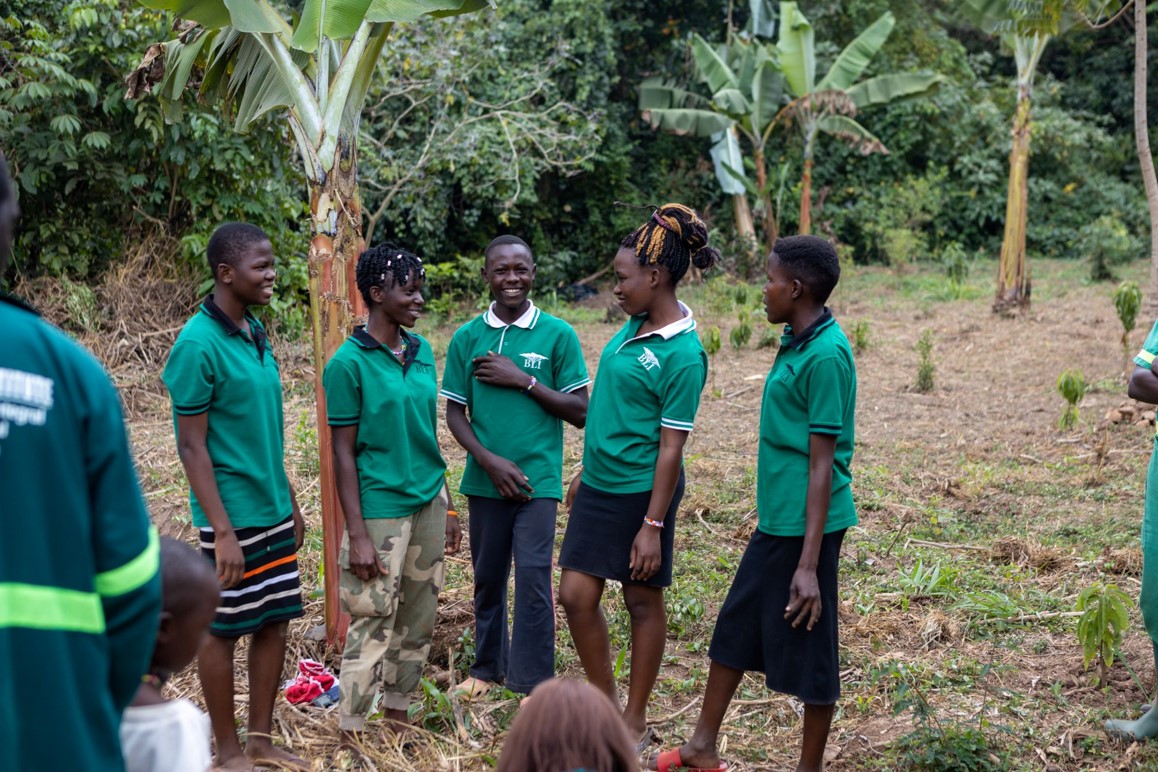
    A group shot of BLI graduates, all smiling
    A smiling group of BLI students!

    Reflecting on his journey, Fr Emmanuel said he could never have imagined that what began as a small village initiative would become a model with influence across Africa. His encouragement to us was simple: start small and see where it leads. Be open to surprise, and trust that meaningful change often begins in unexpected ways.
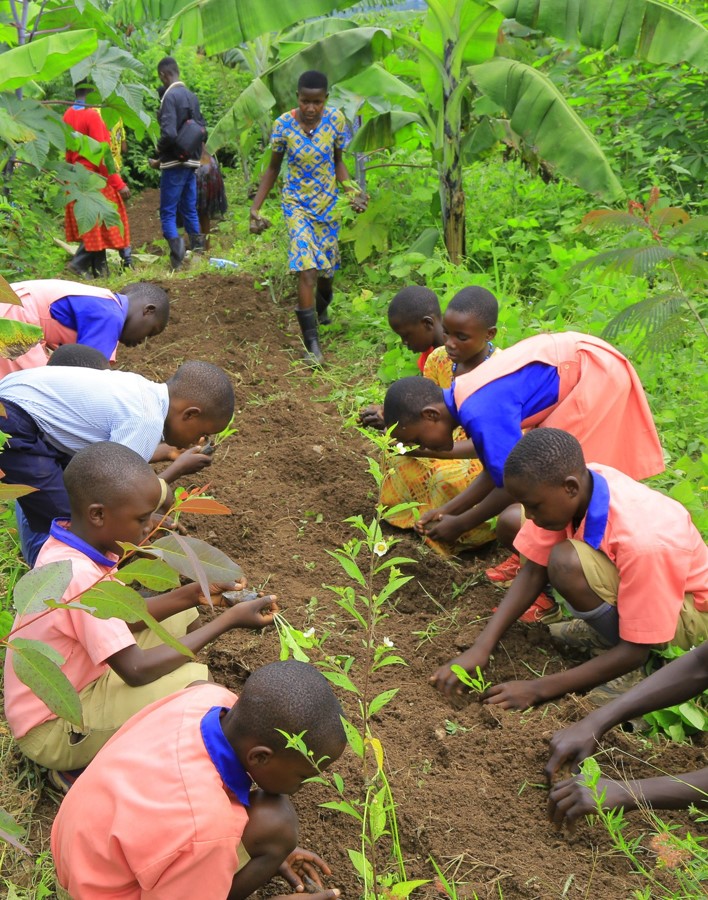
    A group of young people planting.
    Start small, start well, start now!

    Fr Emmanuel has shared his full story in his book Stories from Bethany, On the Faces of the Church in Africa,  which can be purchased from Paulines here.
  • The Secret Garden

    The Secret Garden

    Exploring how early modern English Catholic Recusants used their outdoor spaces for art and devotion during a time of persecution

    Author: Aurelia Eburne is a doctoral researcher in Early Modern Gardening at Durham University

    On Tuesday 24th March, the Journey to 2030 Network met online to hear the insights of guest speaker Aurelia Eburne. As a part of our Jubilee Garden Project series, we have been exploring how gardens and outdoor spaces can be used to both deepen our faith and help us to care for Creation. In this meeting, Aurelia gave us a wonderful insight into the English Catholic Recusants (Catholics who refused to give up their illegal faith during persecution in the 17th century), and how gardens were used as a space of secret devotion and places of relief. This blog is a write-up of the talk she gave.


    Catholic faith in England and Wales was illegal from 1559 to 1791, although full emancipation wasn’t achieved until 1829. During this time, anyone caught practicing their Catholic faith faced huge fines, imprisonment, banning from public participation, and property confiscation; priests were treated as traitors and charged with treason to face execution or life imprisonment. Those brave Catholics who chose to continue practicing their faith had to do so creatively to avoid detection. The “Church” moved into the domestic sphere, where households used art and outdoor spaces to express their faith. In Ireland, congregations used “Mass rocks” (natural rock altars) hidden in remote areas, or elsewhere using trees, holy springs, and gardens as places of encounter became common; places with ‘plausible deniability’ to make them opaque to externals. This practice contributed to nature being seen more as a place of spiritual closeness with the divine.

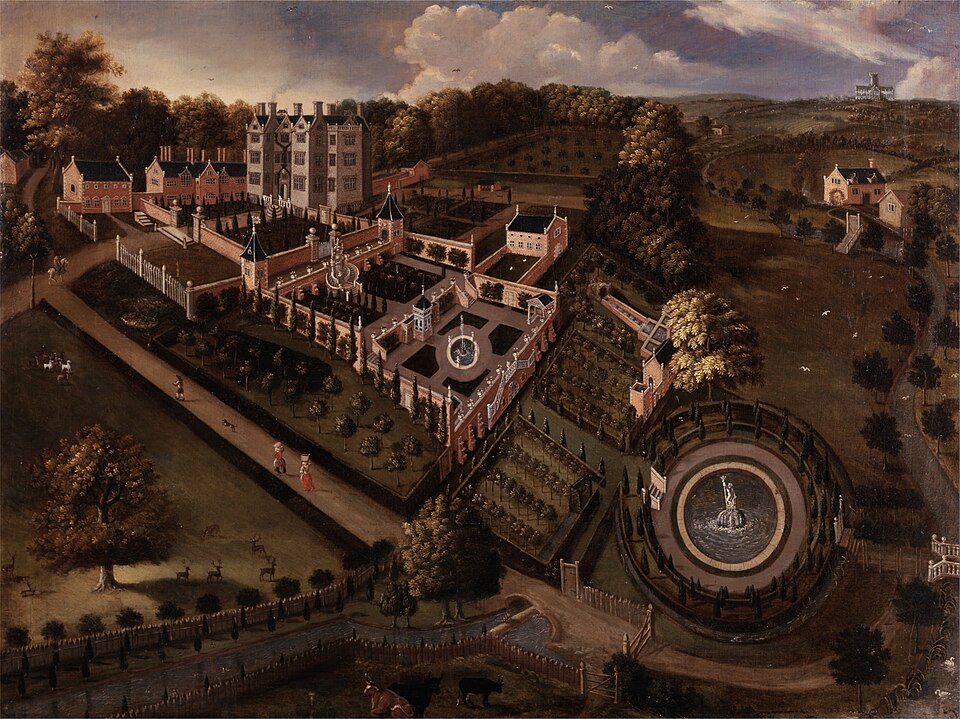
    https://commons.wikimedia.org/wiki/File:Llanerch,_Denbighshire,_Wales_-_Google_Art_Project.jpg The garden at Massey’s Court, Llanerch, in 1662. The Jacobean manor house has two terraced gardens falling away from one side of the house down to a river. An ornamental effect is achieved in the same way as at Hatfield. Italianate influence – something Catholics shared.

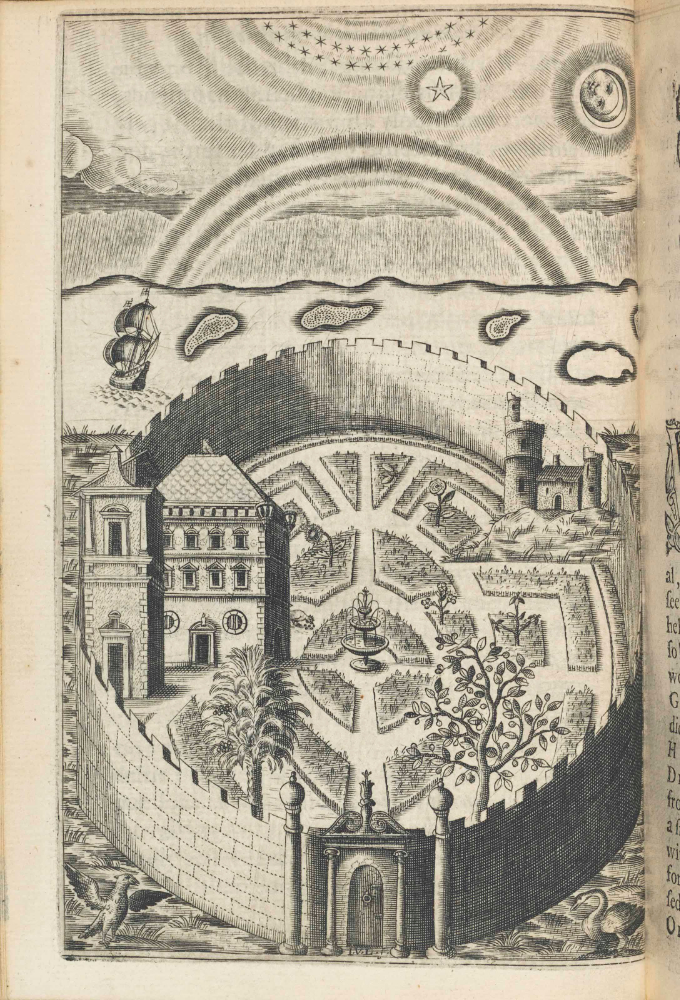
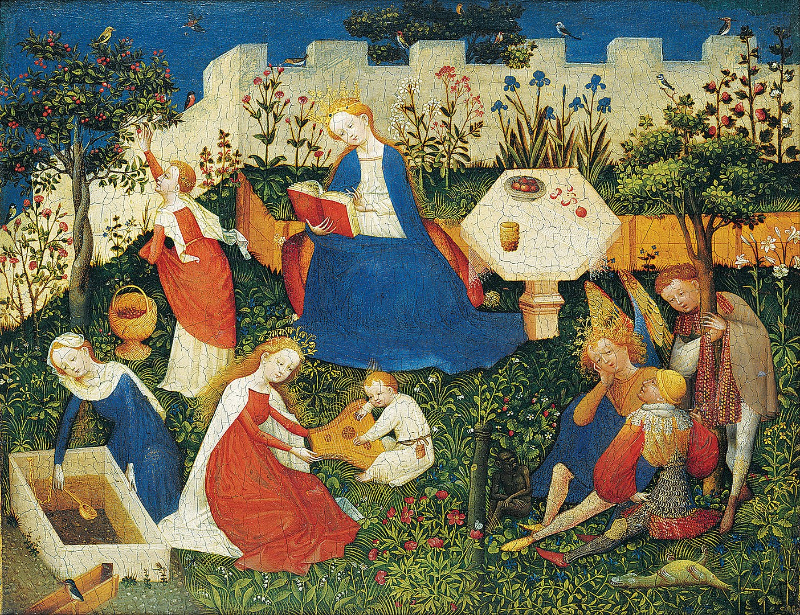
    The image of the Blessed Virgin as “hortus conclusus” (enclosed garden) is a late medieval idea based on readings of Song of Songs, that cast Mary as a protective, fertile space for the “fruit” of her womb Christ Jesus. This image was expanded in the early modern period to place the Church as the “Body of Christ” also under her protection, creating that ecclesiological image of protection of the hidden Church under persecution. Henry Hawkins’ 1633 book “Partheneia sacra” is an important devotional work that draws heavily on this imagery. It contains 20 different outdoor elements, through poetry, art, prayer, and essays, each as a mini devotion to the Virgin Mary. Elements include the bumblebee, the dew, the violet etc.; all examples of everyday things found in an outdoor space that can be used to help us worship. Another later work, Richard Challoner’s “The Garden of the Soul” (1741) draws upon similar ideas, exemplifying how commonplace this metaphor became as the century progressed; the spiritual life is not confined to Mass, but something that seeps into every moment of our life.

    The emblematic Marian garden. Engraving, from [HAWKINS, Henry (1571?-1646).] Partheneia sacra; or the mysterious and delicious garden of the sacred Parthenes symbolically set forth and enriched with pious devises and emblemes for the entertainment of devout soules … by H.A. [Rouen]: John Cousturier, 1633. Available on the Internet Archive at https://archive.org/details/partheneiasacrao00hawk/page/n21/mode/2up [Accessed 09/04/2026]

    It was through persecution that this practice of devotion found its home; a deep understanding of the outdoor world that our faith has now largely forgotten. Modern Church spaces often underutilise the rich Catholic tradition of gardening as a devotional practice where everything is connected, even things that sit outside of the garden (the sky, sounds, the air etc.), and that all requires care and nurturing. We could learn something from the treatment of all things in the natural environment as aiding our connection with the divine, and by extension deserving of our respect and stewardship. This is an understanding that we now refer to as the principle of Integral Ecology; that everything is deeply connected.

    The Medieval Religious (and particularly Marian) garden – the tradition that Early Modern Catholics inherited and were familiar with. The Little Garden of Paradise, mixed technique on oak panel, early 15th c. By Upper Rhenish Master, Public domain, via Wikimedia Commons
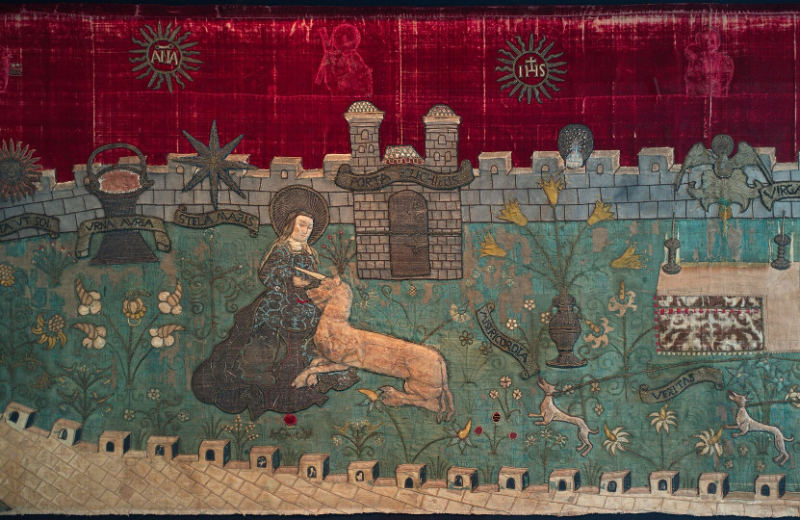
    Embroidery depicting a Marian garden, including many of the emblems listed in Parthenia Sacra, and Latin epithets associated with Mary. The applique style and technique look very similar to the “Nautral History” embroideries by Mary Queen of Scots while she was imprisoned in England with Bess of Hardwick (some of these can be seen at Hardwick Hall or Oxbrugh Hall – both National Trust managed).Antependium of the Mystical Hunt, applique embroidery, mid-16th c. By Armin Kleiner, Public domain, via Wikimedia Commons

    The network spent some time reflecting on Aurelia’s words and had a discussion on how modern parishes can use this deep history of outdoor devotion to create holy gardens. As Catholics became more accepted into public life, leading to full emancipation in the 1800s, it was no longer necessary to hide their faith in the garden, but the practice is a great opportunity to help our communities to understand the principle of Integral Ecology, and to creatively engage people in different ways to interact with the natural world.

    The Jubilee Garden Project is an opportunity to do just that; Gardens become places to put down roots, build fellowship, and strengthen belonging. They offer a physical and symbolic space where social, environmental, spiritual, and even economic renewal can take shape. Click here to find out more.