
Jubilee
Garden
Project
What is the Jubilee Garden Project?
The Jubilee Garden project is an invitation to use physical space to save, heal, transform and renew. In order to engage with rebuilding relationships with God, neighbours and the earth, the project has three patrons to help us.
The patrons are Mary, Martha, and Lazarus, three siblings from the town of Bethany, who will represent for us the theological virtues of faith, hope, and charity.
To be a Jubilee Garden, each patron and their virtue must be enacted in the garden as a way of rebuilding communion with God, neighbour, the earth, and in doing so, ourselves.
The care of the garden becomes a physical representation of the care as a community and our own faith journey.

Mary – Faith
Mary leads us to Attentiveness and Prayer through the virtue of Faith.
This encourages us to cultivate beautiful spaces of silence, prayer, and peace. Such a space is symbolic of Mary sitting and listening at the feet of Jesus and being attentive to Him.
A Mary garden allows people a refuge from a busy and noisy world full of distraction.
Examples of this could be a silent space, a peace garden that uses all the senses, a prayer labyrinth, a shrine, or even…an open Church.

Lazarus – Hope
Lazarus leads us to Faithful Action through the virtue of Hope.
Responding to the huge task of reversing damage to our earth, the Lazarus garden builds a place for wildlife and in doing so, cultivates hope.
The Lazarus garden is a space symbolic of the new life given to Lazarus. How are we called to bring back from the brink, the gift of life that God blessed this earth so abundantly with? The return of endangered species can seem like a preview of the resurrection that was shown to faithful Lazarus.
Examples of a Lazarus Garden could be a meadow, native hedging, a tiny forest, bird boxes, vertical gardens…the opportunities are endless.

Martha – Charity
Martha leads us to Service and Work and through through the virtue of Charity.
A Martha Garden is a space symbolic of Martha’s loving service and renews our vision of work and community.
Martha renews the vision of work as service to one another, strengthening community, identity and rooted in justice.
The Garden could focus on food production and preservation, growing materials for crafts, improving diet, as well as physical and mental health through the act of gardening. How could you use indoor spaces alongside the garden to encourage crafts and other good works?

A Pilgrimage of Hope 2025 – 2033
The Catholic Church celebrated the Jubilee Year ‘Pilgrims of Hope’ in 2025. As one Jubilee Year draws to a close, we look ahead to the Jubilee of Redemption 2033, which marks the 2000th anniversary of the resurrection of Jesus and will be a year of great celebration for all Christians.
Using gardens as a focal point, the Jubilee Garden Project is a communal pilgrimage of prayer and work, rooted in place. As fellow craftspeople, we help to bring the Creator’s work to completion. It will span 8 years, as the 8 days of creation, with the 8th day becomes symbolic of the New Creation in the Resurrection of Jesus.
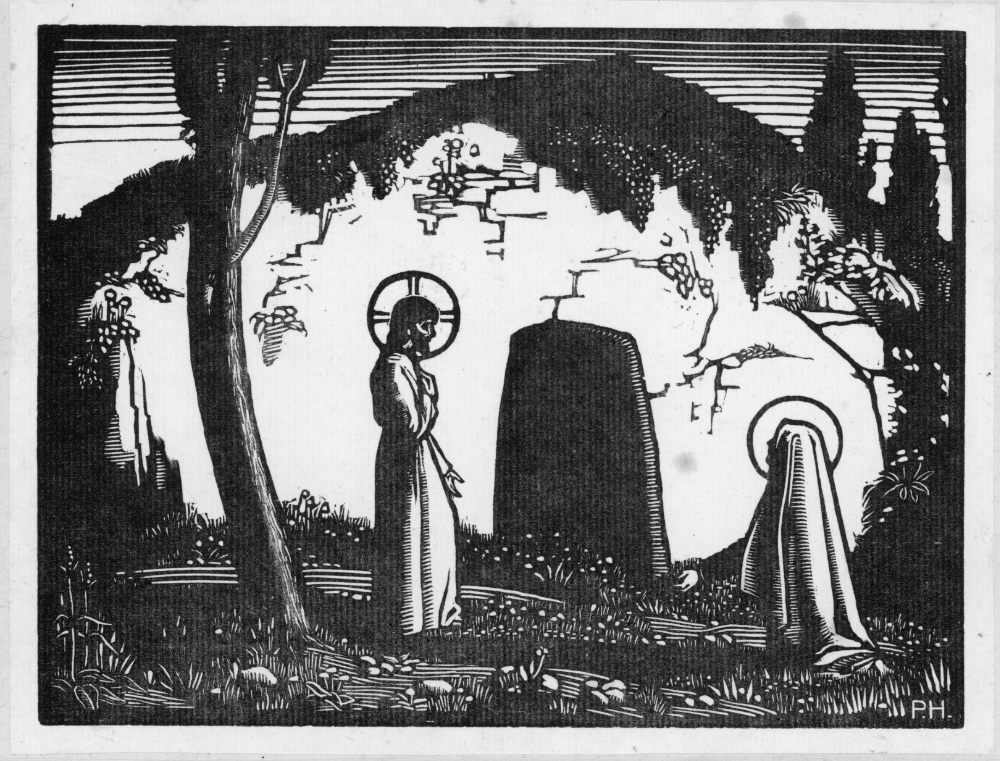
“On the third day the friends of Christ coming at daybreak to the place found the grave empty and the stone rolled away. In varying ways they realised the new wonder; but even they hardly realised that the world had died in the night. What they were looking at was the first day of a new creation, with a new heaven and a new earth; and in a semblance of the gardener God walked again in the garden, in the cool not of the evening but the dawn.”- G.K. Chesterton
What is a Jubilee?
The Jubilee, like the Sabbath, is a time to reestablish a proper relationship with God, with one another, and with all of creation. Building communion within these relationships is our life’s mission and task.
The ‘Jubilee Garden Project’ invites communities of all kinds to reconnect to their
faith and mission, through gardening. Gardens become places to put down roots, grow in fellowship, and belonging. Gardens offer a physical space where spiritual, social, environmental, cultural and even economic renewal can take shape.
Each garden is unique, shaped by the needs, resources and imagination of its community.
The project encourages creative and meaningful responses to the spiritual, social and environmental challenges each community faces.
The garden transforms space to place.
Get involved
Watch this space for exciting new developments! The project is currently being grown organically by The Ecological Conversion Group’s ‘Journey to 2030’ network discussions. You can catch up with latest discussions from this Network via our blog, or sign up to our next meeting to join in the conversation via our events page.
